
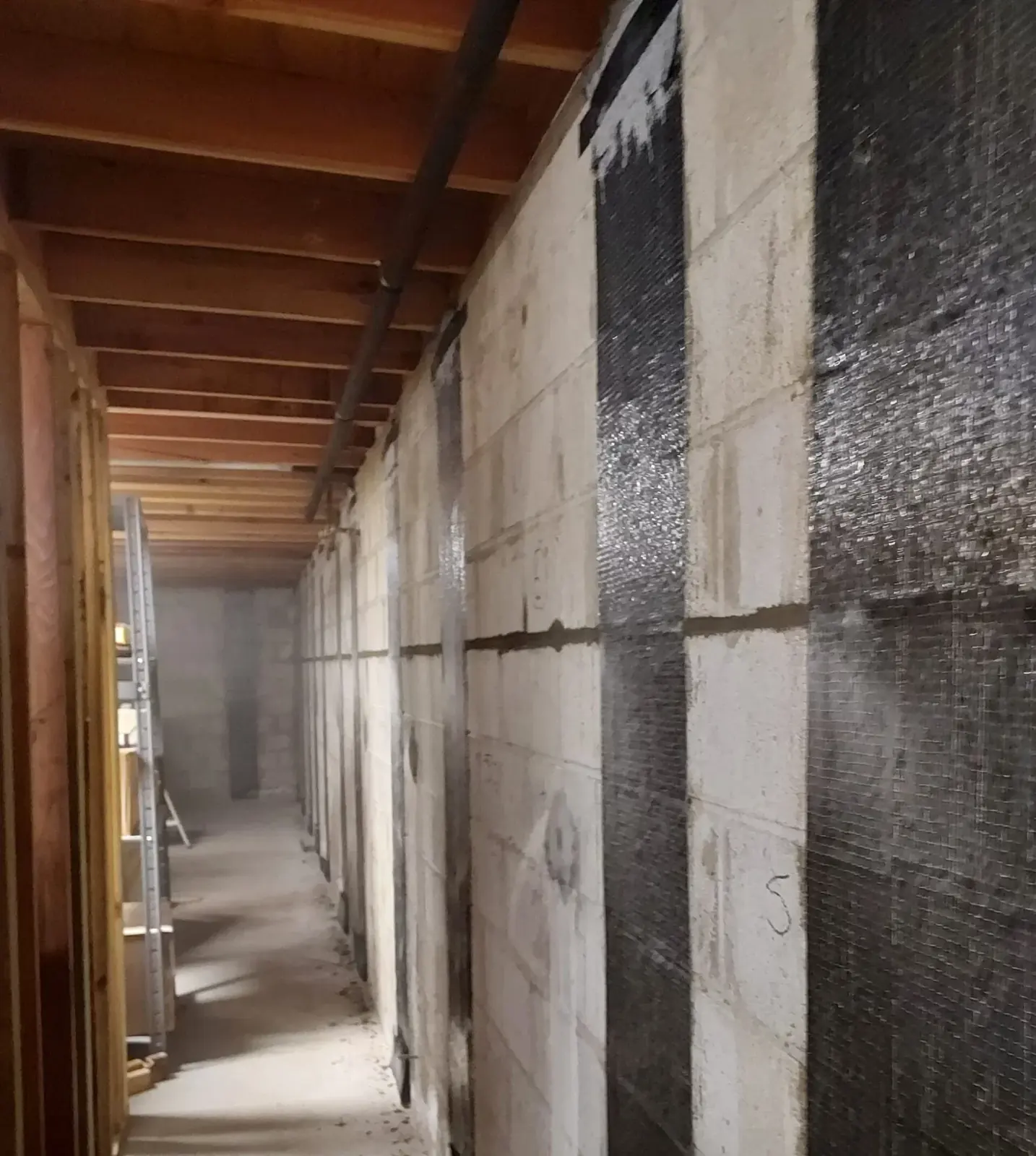
Basement repair
Basement repair that keeps the walls straight and the space usable
Your basement carries the weight of the house and holds back the soil around it. When its walls crack, bow or leak, we repair the cause so the space stays safe and useful.
Why basements need a specialist
A basement wall does two jobs at once. It carries the load of the house above, and it resists the pressure of soil and groundwater pushing in from outside. That pressure changes with the seasons. After heavy rain, wet clay can push hard against a wall that was fine all summer.
Because of that, basement problems rarely stay small. A hairline crack lets water in, water softens the soil and raises pressure, and the crack grows. Our work begins with a thorough inspection to find the root cause, from wall cracks to water seepage, so the repair we recommend fixes the real problem and not only what you can see.
Crack guide
Reading the cracks in your basement walls
The direction of a crack says a lot about what is happening behind it. This guide helps you understand what you are seeing. Only an inspection can confirm it, but it will help you decide how urgently to call.
| What you see | What it usually means | Typical response |
|---|---|---|
| Hairline or vertical crack | Usually caused by concrete shrinking as it cured. Often not structural. | Seal with epoxy or polyurethane injection. If it is damp, address the water source too. |
| Horizontal crack | Often a sign that soil pressure is pushing the wall inward. | Needs prompt attention. Reinforce with carbon fiber straps or wall anchors. |
| Stair step crack in block | Movement or settlement of part of the foundation. | Have it inspected soon. Repair may involve stabilizing the wall and the footing below. |
| Diagonal crack | Uneven settling, where one side of the structure drops more than the other. | Often strengthened with carbon fiber and paired with support at the settling area. |
| Cracks with white powder or damp stains | Water is moving through the wall. | Seal the crack and correct the drainage. See our water proofing page. |
How we repair basement walls
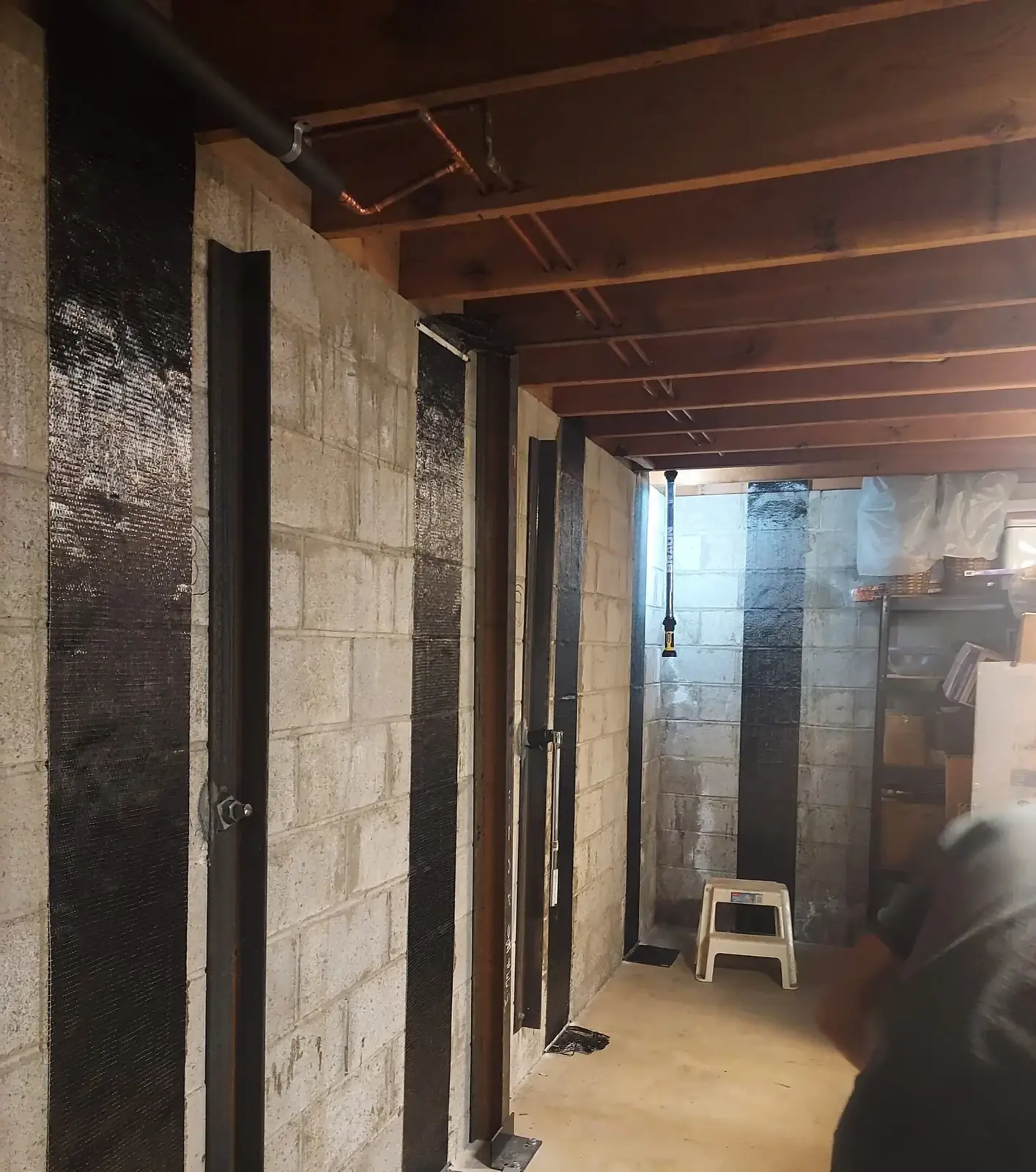
Carbon fiber straps
Strong, thin straps bonded to the wall to stop it from moving further. They take up almost no room, so the basement stays open, and they are a good fit for walls with mild inward movement.
Wall anchors
Steel anchors tie the wall to stable soil outside the house, adding support when pressure is pushing the wall inward. They can be tightened over time as needed.
Epoxy and polyurethane injection
Cracks are filled and bonded from the inside. Epoxy restores strength to structural cracks, and flexible polyurethane seals cracks that need to stop water.
Drainage and exterior waterproofing
Reducing the water pressure on the wall protects every other repair. Exterior drainage and waterproofing keep water from collecting against the foundation.
Basement leaks and moisture
Water and basement walls fight constantly. Seepage through cracks, damp floors and musty air all point to water getting in. We stop leaks with sealing, moisture resistant coatings and drainage that sends water away from the foundation.
Our water proofing services work together with structural basement repair. If a wall is cracked and wet, sealing the crack without reducing the water outside only moves the problem. We tackle both, so you keep a dry, healthy space.
Floor cracks, settling and uneven slabs
Basement floors can crack and settle too. A small shrinkage crack is common and easy to seal. A floor that heaves, drops or slopes is a different story and may point to water beneath the slab or soil that moved.
If the floor has sunk or you see gaps where the slab meets the wall, we look for the cause and, when needed, lift and stabilize it using our concrete leveling services.
Getting your basement ready to use
A repaired basement is the best starting point for finishing it. Once the walls are stable and dry, you can add framing, flooring and living space with confidence. We recommend finishing only after the repair is complete and the moisture issue is solved, so the work behind your new walls does not hide a problem.
Planning a purchase? Ask about our pre purchase foundation checks, which give you an objective look at a basement before you buy. For other wall concerns, see our wall repair page, or read about the signs of foundation problems.
Planning basement repair around your life
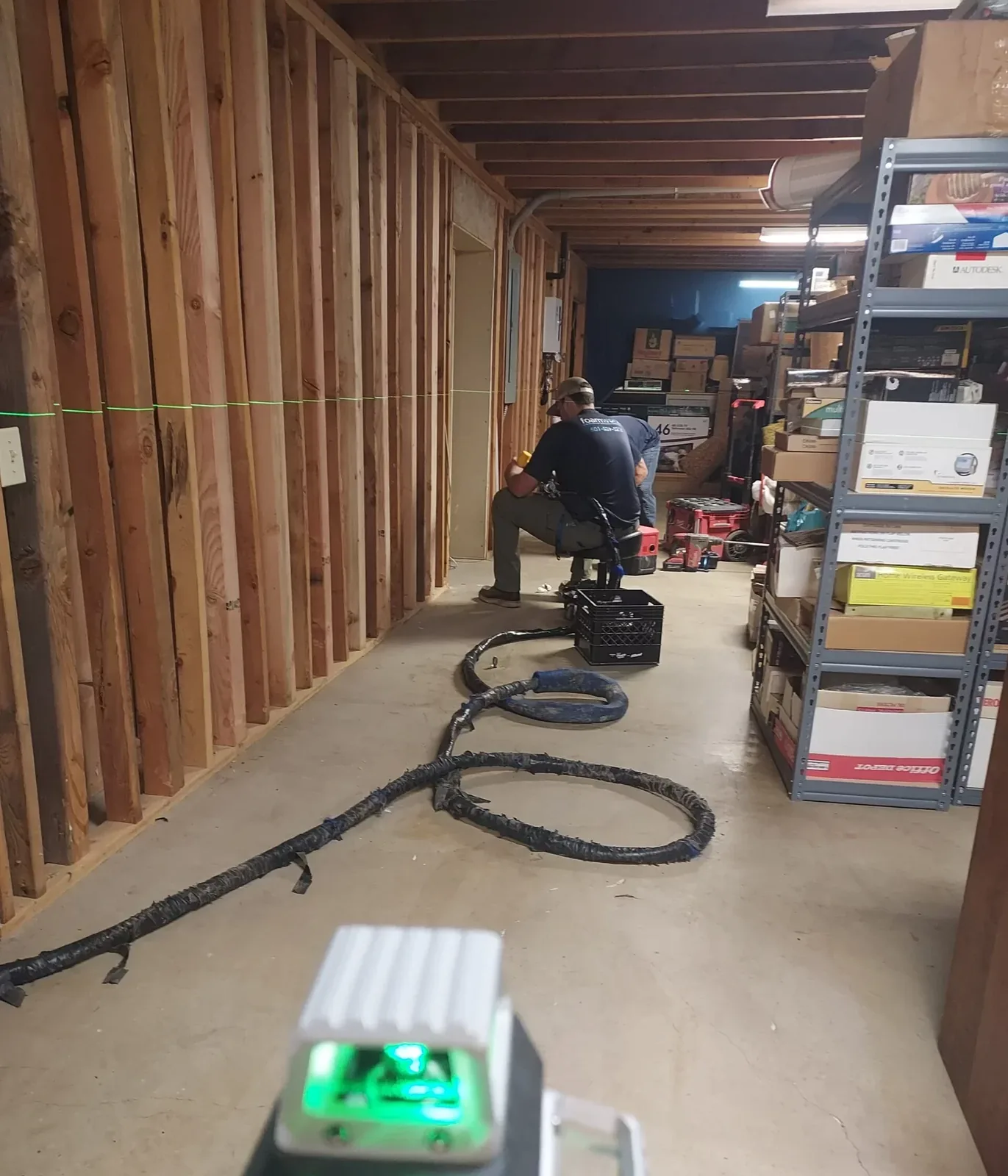
Basement repair is easier on your household when you know what to expect. Most work happens inside or along the outside walls, so plan to clear the areas the crew will need, move stored items away from walls and protect anything you cannot move. If the work involves exterior access, tell us about gardens, patios and decks near the foundation so we can plan around them.
Think about your end goal too. If you want a finished basement, repair and waterproofing should come first, with finishes added only when the walls are stable and dry. If you are preparing to sell, a documented repair gives buyers confidence and can prevent surprises during inspection.
We also help you set priorities. Not every problem has to be solved at once, and a good plan puts safety and structural issues first, followed by moisture control, then cosmetic repair.
Families often ask how long a basement will be out of use. Small repairs, such as crack injection, may take a day, while larger projects, such as wall reinforcement and drainage, take longer. We give you a schedule with your estimate, tell you which areas will be affected and let you know early if anything changes along the way.
Last, think about records. Photograph your basement walls and floors before the work, during any excavation and after completion. Keep copies of your estimate, any permits and the notes we provide about the cause and the repair. A clear file helps with future maintenance, with insurance conversations and with the sale of the property, and it gives you a baseline to compare against if anything changes.
Before the crew arrives
- Clear a path to the walls and floors being repaired.
- Move stored items and furniture away from the work area.
- Protect electronics and keepsakes from dust.
- Note where water has entered and photograph it.
- Tell us about any past repairs or leaks.
- Ask about timing, noise and cleanup.
FAQ
Questions homeowners ask
Is a crack in my basement wall serious?
It depends on the shape and whether it is changing. Hairline vertical cracks are often minor, while horizontal and stair step cracks can signal movement. An inspection tells you for sure.
What causes a basement wall to bow?
Wet soil pushes against the wall, especially after heavy rain. Over time that pressure can bow the wall inward. Reinforcement and better drainage reduce the pressure and stabilize the wall.
Do carbon fiber straps really work?
Carbon fiber straps are bonded to the wall to resist further inward movement. They suit walls with mild movement and are a slim alternative to larger steel systems.
Can you repair a basement that leaks?
Yes. We seal cracks, treat walls and floors with moisture resistant materials and correct the drainage that sends water toward the foundation.
How do I get a free basement estimate?
Call (479) 225-4899 or send the form. We will inspect the basement and give you a clear explanation and free estimate.
Get your basement checked
Tell us what you are seeing. We will look at it, explain the options in plain terms and give you a free estimate.
- No subcontractors
- NICET certified inspections
- No commissioned salespeople
- Inspectors with 20+ years