
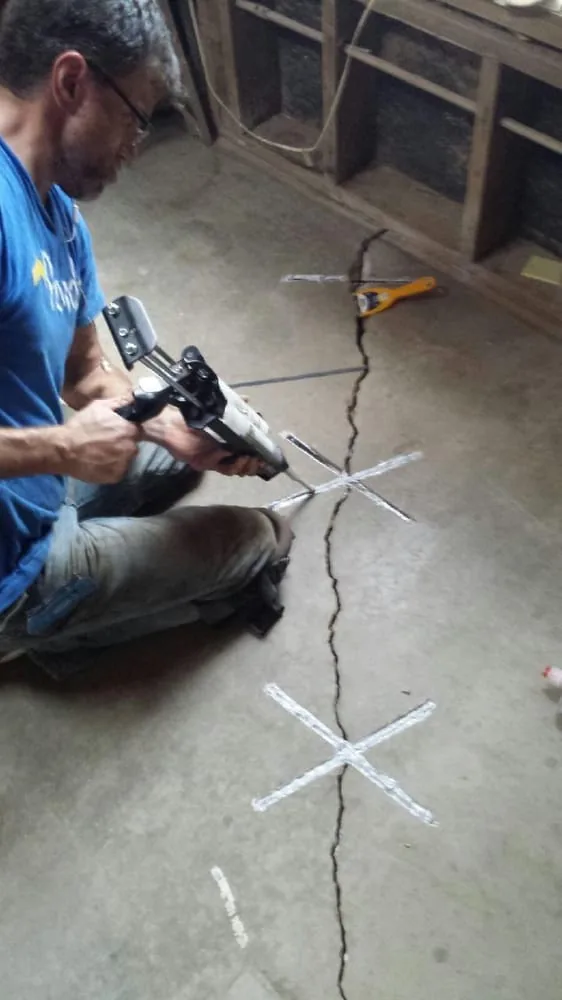
Slab foundations
Slab repair usually means lifting and stabilizing the concrete. We fill voids under the slab with polyurethane foam or use slab jacking, and we inject cracks, to restore level and stop further sinking.
Fayetteville, Arkansas
Fayetteville sits in the Ozark hills, where soil moves, creeks rise and no two lots drain the same way. We repair foundations with that ground in mind.
Fayetteville is built across steep hills and narrow valleys. A single street can start on a rocky shelf and finish on deep, soft clay. That variety is the first reason foundations here behave differently from those in flatter parts of the country.
The soil layer is often clay, which swells when it is soaked and shrinks as it dries. Under that clay sits limestone, and in some areas the limestone has been dissolved into voids over thousands of years, a landscape known as karst. Water moves through these layers in ways that are hard to predict, and a foundation that is half on rock and half on clay can settle unevenly.
Add heavy spring rain, creeks such as Town Branch and Mud Creek that rise quickly and freeze and thaw cycles in winter, and you get steady stress on footings, slabs and walls. When we inspect a Fayetteville home, we study the slope, the drainage and the soil as closely as the cracks themselves.
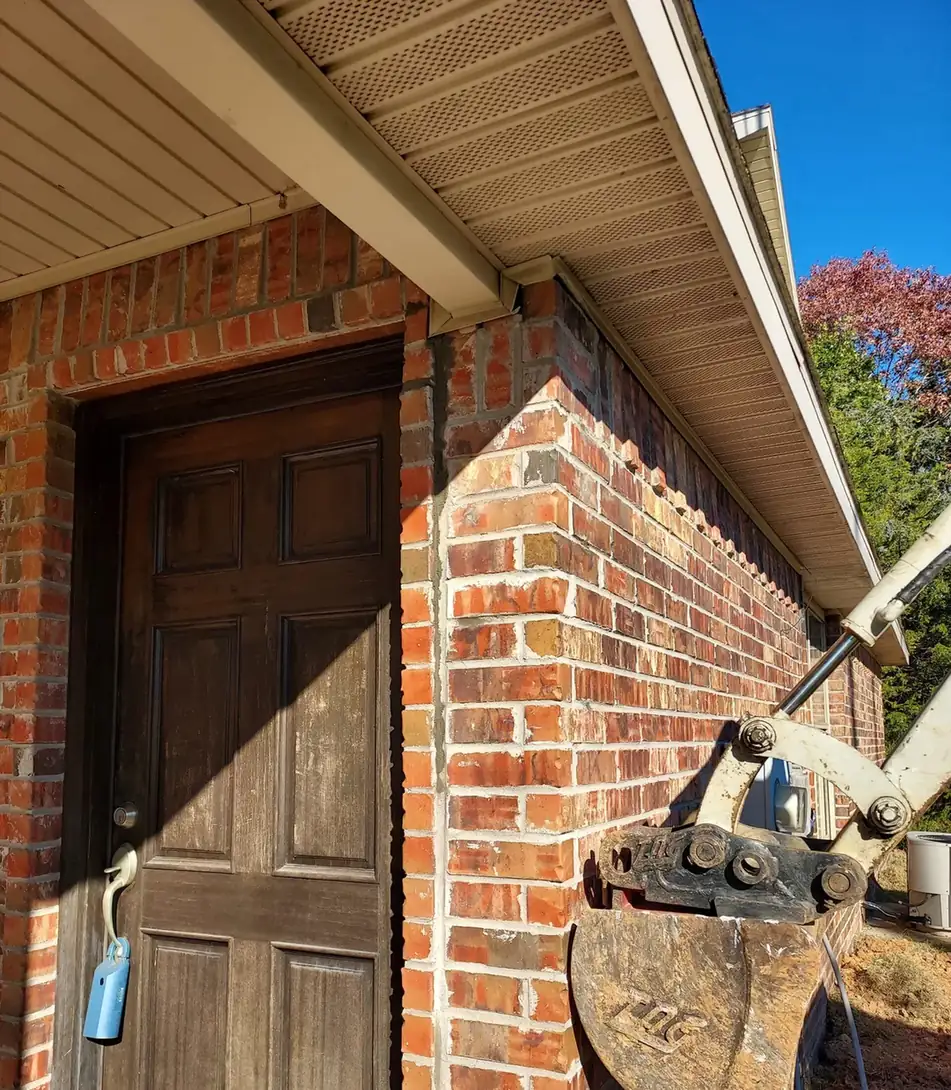
Slab repair usually means lifting and stabilizing the concrete. We fill voids under the slab with polyurethane foam or use slab jacking, and we inject cracks, to restore level and stop further sinking.
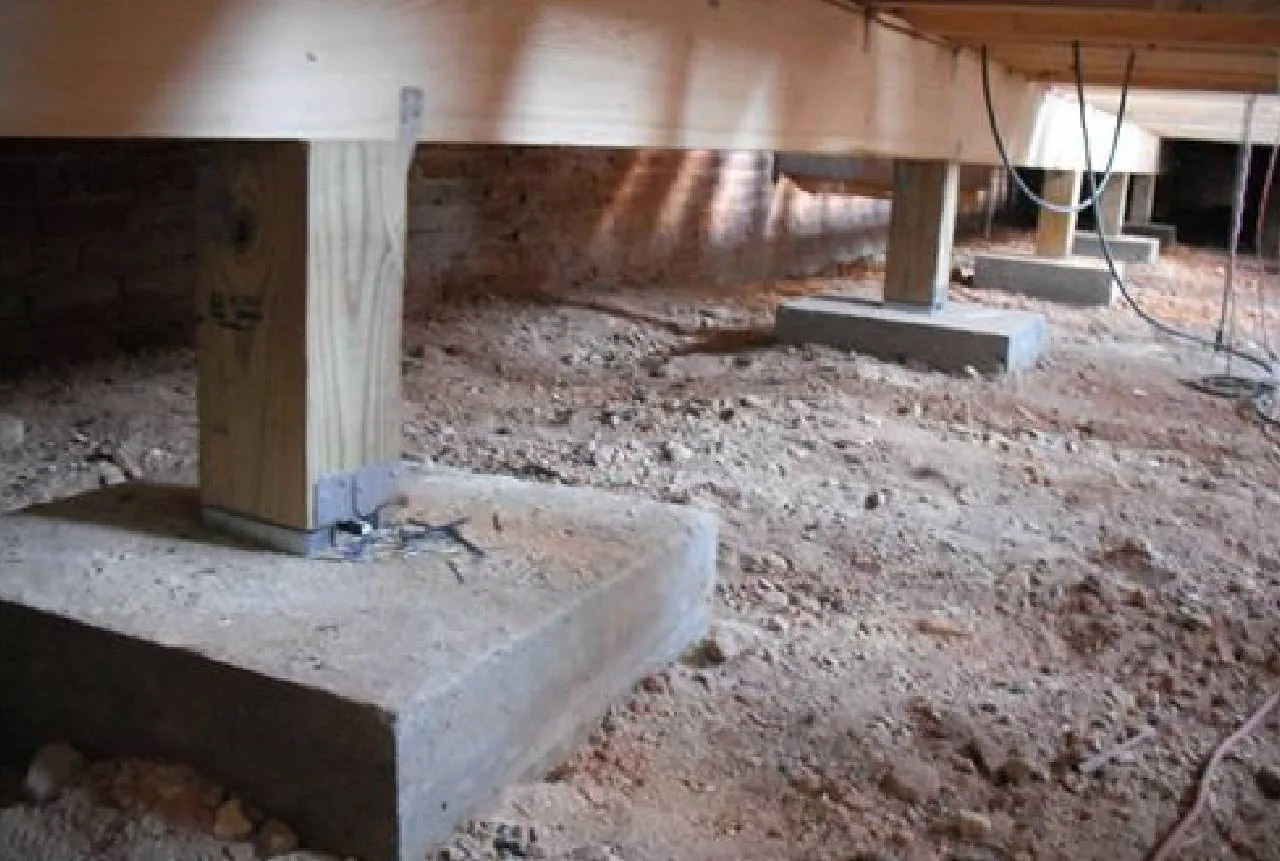
We strengthen beams and joists, reset or add support, control moisture with vapor barriers and drainage, seal vents and, when needed, encapsulate the space to stop mold, rot and pests.
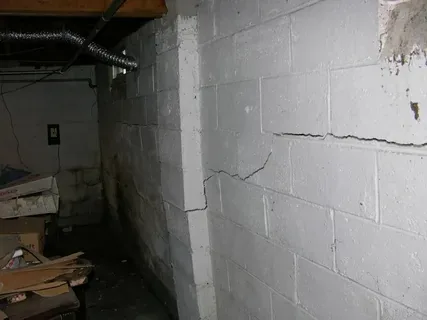
Cracked, bowing and leaking walls are our focus. We reinforce with wall anchors and carbon fiber straps, seal cracks with epoxy and add exterior drainage to reduce water pressure.
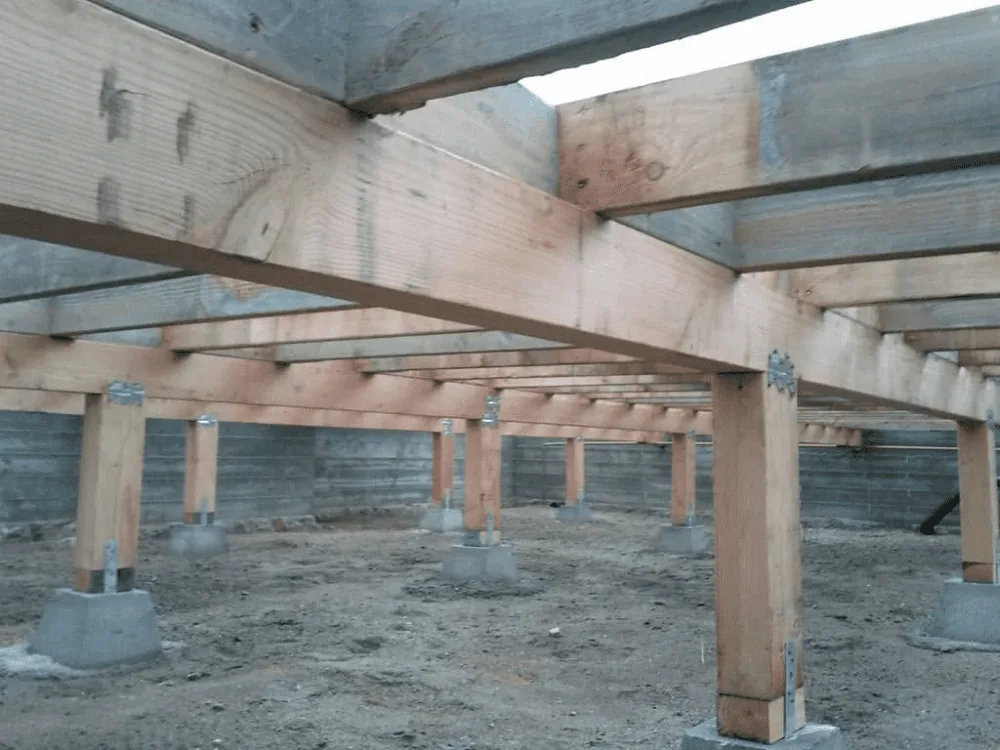
We replace or reinforce damaged beams and piers, add support where floors sag and adjust shims to level the structure. Our pier and beam foundation guide explains what to expect.
Use the slider to see how piers driven through soft clay to stable ground carry a settled slab back to level.
Steel piers go down through the soft soil until they reach ground that can carry the load.
With the piers set, the settled side is raised slowly and evenly so the structure moves as one.
A laser line confirms the slab is level before the piers are locked off and the work is closed up.
Not every crack is an emergency. Small hairline and vertical cracks usually come from concrete shrinking as it cured, and they rarely affect the structure. They can be sealed with epoxy or polyurethane injection, and if one is wet, we also address the water coming through it.
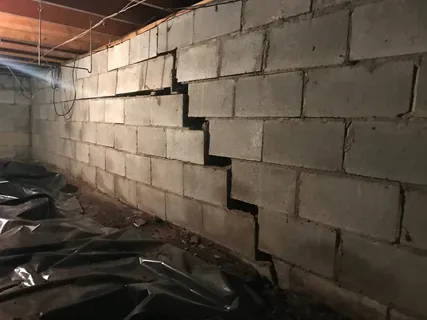
Horizontal and stair step cracks are different. They point to real movement, often from soil pressure or settlement, and they call for professional attention. Repairs may involve underpinning or piers beneath the foundation. Diagonal cracks, usually from uneven settling, can be strengthened with carbon fiber straps. The sooner a crack is read correctly, the smaller the repair tends to be. See our signs of foundation problems guide for what to watch for.
Older neighborhoods near downtown, Wilson Park and Mount Sequoyah include many homes on pier and beam foundations with crawl spaces, and stone or block basements. These houses have decades of seasonal movement behind them, and wood framing, piers and old drainage often need attention.
Newer subdivisions on the edges of the city, and the homes built on cut and fill lots, are more often slab on grade. These slabs can settle where fill soil was not fully compacted, and they can crack when water collects along the edge. Rental properties, student housing and commercial buildings near campus and Dickson Street add their own mix of foundation types, and we repair them all.
We look at the foundation, the slope and the drainage, and we ask what you have noticed and when.
You get a clear diagnosis in plain language, including whether repair is needed now or can wait.
We carry out the work with the method that suits your soil and structure, from piers and carbon fiber to injection and leveling.
We recommend drainage, gutter and waterproofing steps that keep the repair from being undone.
Foundation work and water control go hand in hand in Fayetteville. A repair that ignores drainage is a repair that can fail, so we often pair structural work with water proofing, gutters or concrete leveling around the home.
Fayetteville has four clear seasons, and each one asks something different of a foundation. In late winter and spring, heavy rain saturates the soil and tests gutters, drainage and basement walls. Summer heat dries and shrinks clay, which can open gaps at corners and make doors drift out of square. Fall brings leaves that clog gutters just before the wettest months, and winter freezes can stress shallow footings and concrete.
A simple routine helps. Clear gutters in spring and again in late fall. Watch the soil next to the foundation during dry spells and water it lightly if it pulls away from the walls. After a hard freeze, look at the foundation and slabs for new cracks. Our team is happy to look at anything that seems different from one season to the next.
Students, renters and landlords make up a large share of Fayetteville's housing, and foundation problems often surface after a lease changes or a tenant reports a crack. If you manage rental property, tell us the age of the building and any past repairs. We can inspect, explain what is urgent and what can wait, and provide a written scope that you can share with owners or insurers.
We also work with owners who are planning remodels or additions. Before you move walls or add weight to a structure, it makes sense to know the condition of the foundation underneath. A short inspection can confirm that the base can carry the project and flag any repairs that should be done first, so your remodel is not built on a problem.
Whatever brings you to us, we start by listening, then we look closely at the property before we recommend anything.
If you are not sure whether you need a repair, a second opinion, or just reassurance, call us. We are glad to talk through what you are seeing over the phone and to schedule a visit when it makes sense. Fayetteville has a long history of building on difficult ground, and we have spent decades learning how to repair and protect structures in it.
FAQ
Clay soil swells and shrinks with moisture, hillsides move and limestone below can leave uneven support. Together they put steady stress on slabs and walls.
Yes. We repair pier and beam and crawl space foundations, including beams, piers, shims, vapor barriers and drainage.
Horizontal, stair step and widening cracks, along with sticking doors or sloping floors, deserve an inspection. Hairline vertical cracks are often minor.
Yes. We also serve Bella Vista, Rogers, Bentonville and Springdale, and the communities between them.
Yes. Call (479) 225-4899 or send the form and we will inspect your property and give you a free estimate.
Tell us what you are seeing. We will look at it, explain the options in plain terms and give you a free estimate.